May 14, 2026 4 min read

Risk Assessment Process: 5-Step Guide for Safety Professionals
Industry:
Solution:
A risk assessment process helps you find workplace hazards before they cause injuries. You evaluate how serious each hazard is, then put controls in place. This approach reduces incidents, cuts costs, and keeps you compliant with regulations.
This guide walks you through the risk assessment steps: identify hazards, determine who’s at risk, analyze and evaluate threats, document your findings, and schedule reviews. You’ll learn how to score risks using a risk matrix, meet documentation requirements, and identify when to trigger reviews as workplace conditions change.
Main takeaways
- Risk assessment prevents injuries before they happen. It reduces incidents, cuts costs, and keeps you compliant with regulations.
- The process follows five steps: identify hazards, determine who’s at risk, analyze and evaluate threats, document findings, and review regularly.
- You must involve frontline workers. They spot non-routine hazards that supervisors miss during standard inspections.
- Risk scores drive your response. Scores 1-4 need monitoring, 5-9 need administrative controls, 10-16 require engineering fixes, and 17-25 demand immediate action.
- Review annually at minimum. Workplace changes, incidents, new equipment, or regulation updates trigger immediate reassessment.
Download the Risk Matrix Guide
Understanding the components of a risk matrix will allow you and your organization to manage risk effectively.
Get the Free Guide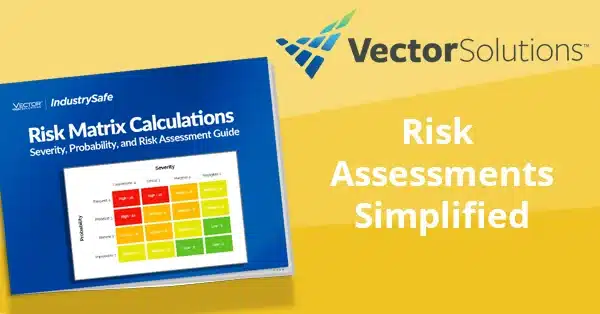
What is a risk assessment?
Risk assessment is a systematic process. You identify potential hazards in your workplace. You evaluate who might be harmed. Then you determine what actions will eliminate or control those risks. Organizations use this process to protect employees, contractors, and visitors. It also keeps them compliant with health and safety regulations.
Understanding the difference between hazards and risks is fundamental. A hazard is a potential source of harm. Examples include chemical leaks, unguarded machines, or unsafe work practices. Risk is different. It measures how likely someone will be harmed by that hazard. It also measures how severe that harm could be.
Benefits of conducting risk assessments
Effective risk assessment delivers measurable benefits:
- Prevents accidents and injuries – You identify hazards before incidents occur. This protects your workforce and prevents costly downtime.
- Saves time and money – Proactive risk management reduces incidents, workers’ compensation claims, and operational disruptions. Every prevented incident avoids medical costs, lost productivity, and potential OSHA penalties. Workplace injuries cost the U.S. economy an estimated $181.4 billion yearly, per NSC Injury Facts.
- Improves decision-making – Risk analysis provides data-driven insights for resource allocation and control prioritization. You can direct budget to the highest-risk areas first.
- Enhances safety culture – Regular assessments show workers you’re committed to their wellbeing. This builds trust. Workers report hazards more often when they see management taking action.
- Ensures regulatory compliance – Documented assessments meet legal requirements and prepare you for audits. Sites with 5 or more employees must maintain documented risk assessments in many jurisdictions.
Understanding these benefits, let’s examine the systematic process for conducting effective risk assessments.
How to conduct a risk assessment: 5 steps
A comprehensive risk assessment process follows five key steps:
1. Identify hazards
The first step in risk assessment is finding and describing what could cause harm in your workplace. Look at risks you can control and risks you cannot control.
When identifying hazards, consider:
- Routine operations and daily tasks
- Non-routine operations such as maintenance, cleaning, or changes in production cycles
- How plant and equipment are used
- Chemicals and substances in use
- Safe and unsafe work practices
- The general state of your premises
- Past accident and ill-health records
Review your incident and near-miss data. These records often reveal hazards that routine inspections miss. Look beyond obvious physical hazards. Include health hazards like manual handling, chemical exposure, and causes of work-related stress.
Conduct this step collaboratively with frontline workers who perform the tasks daily. Their unique knowledge reveals hazards that supervisors miss. Use the best information available, which may require research outside your organization.
2. Determine who might be harmed
During hazard identification, determine which groups could be affected by each hazard:
- Employees across all shifts, including nights and weekends
- Contractors and temporary workers
- Visitors and members of the public
- Vulnerable groups: young workers (under 18), new or expectant mothers, workers with disabilities, migrant workers, new employees, and seasonal staff
Base your exposure assessment on the task being performed, not the job title. A worker covering an unfamiliar shift faces hazards their usual role never encounters.
Involve frontline workers in this process. They spot exposures that supervisors and EHS staff cannot observe. Their daily experience makes them the most reliable source for identifying real-world hazards.
Centralize Risk Assessment Data
Track hazards, controls, and review schedules in one system. Pull audit-ready reports without searching spreadsheets.
See How Vector EHS Works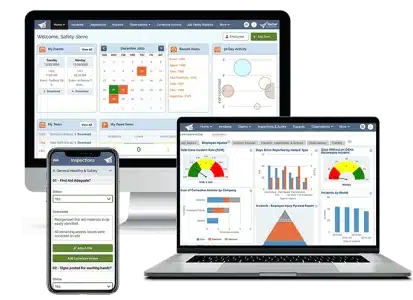
3. Analyze and evaluate risks
You’ve identified hazards and who might be harmed. Now you need to understand each risk and decide what to do about it.
Analyze the risk
During risk analysis, consider:
- How likely is this hazard to cause harm?
- How severe would the harm be?
- Who would be affected and when?
- Are current controls working?
- What additional controls could reduce risk?
Use high-quality, complete information. Accurate data produces accurate risk analysis. You may need to go outside your organization to get this information.
Document any opinions, biases, assumptions, or limitations in your analysis. Communicate these to decision makers so they understand the constraints.
This analysis helps you understand the level of risk each hazard presents. You can then prioritize your response. Overexertion and contact events lead Days Away, Restricted, or Transferred (DART) cases. These incidents result in a median of eight days away from work, per the Bureau of Labor Statistics. Thorough risk analysis and appropriate controls prevent these incidents better than reactive approaches.
Score risks with a risk matrix
This qualitative risk assessment method uses a 5×5 risk matrix that plots probability (1 = rare, 5 = almost certain) against severity (1 = negligible, 5 = catastrophic). Multiply the two values for a risk score between 1 and 25.
- Scores 1-4: Low risk—monitor and reassess
- Scores 5-9: Medium risk—administrative controls needed
- Scores 10-16: High risk—engineering controls required on a defined timeline
- Scores 17-25: Critical risk—stop work if needed and act immediately
This scoring framework drives control decisions. It helps you prioritize where to allocate resources first.
Evaluate against your criteria
Compare your risk analysis results against your organization’s existing risk criteria. This determines whether you need to treat the risks you’re assessing. Evaluation ensures consistency across your organization.
You don’t have to eliminate every risk. But the law requires you to do everything reasonably practicable to keep people safe. This means weighing the risk level against what it takes to control it. Consider the cost, time, and effort required for each control measure.
Apply the hierarchy of controls when selecting treatment options:
- Elimination – Remove the hazard entirely
- Substitution – Replace with something safer
- Engineering controls – Isolate people from the hazard
- Administrative controls – Change how people work
- PPE – Protect the worker (last line of defense)
During risk evaluation, your organization may choose to:
- Do nothing (if risk is already acceptably low)
- Consider implementing other risk treatments
- Reconsider your organization’s objectives
- Return to the risk analysis phase to develop a more thorough understanding of the risk at hand
4. Document your findings
If you employ 5 or more people, you must record your significant findings, including:
- The hazards (things that may cause harm)
- Who might be harmed and how
- What you are doing to control the risks
- Risk ratings before and after controls
- The responsible party for each control
- Next review date
Focus on controlling risks in practice, not just on paper. Use a risk register instead of narrative reports. This makes tracking and auditing easier. Each entry should include the specific hazard, control measures, and who’s responsible for implementing them.
5. Review and update risk assessments
Review your risk assessments at least annually. Trigger a prompt review whenever:
- Controls are no longer effective
- Workplace changes occur (new staff, processes, substances, or equipment)
- Workers spot problems or raise concerns
- Accidents, incidents, or near misses happen
- Regulations are updated
- Audit findings identify gaps
Multi-site risk assessment programs benefit from tiered review schedules. Review high-risk assessments quarterly. Review moderate-risk assessments semi-annually. Review low-risk assessments annually. This approach aligns with ANSI/ASSP Z310.1-2026, the first U.S. consensus standard for workplace risk assessment.
Each finding from a review should trigger a corrective action. Assign it to a named person with a clear deadline. Without this ownership and accountability, reviews become paperwork exercises instead of prevention tools.
Ready to Strengthen Your Risk Management Program?
See how Vector Solutions supports every step of the risk assessment process with training, documentation tools, and compliance tracking.
Request a Demo
Effective risk assessment protects workers and operations
The five-step risk assessment process gives you a systematic approach to workplace safety. Worker involvement, accurate documentation, and regular reviews make this more than a compliance exercise. They turn it into a real prevention tool. But executing this consistently requires the right systems.
Spreadsheets can’t flag missed review dates or connect incidents to open risk items. Vector EHS Management automates review schedules and centralizes risk registers across every site. It shows you patterns between near-miss reports and existing hazards so you can act before someone gets hurt.
See how it works in a live demo.
FAQs about the risk assessment process
What are the 3 Cs of risk assessment?
The 3 Cs are Context/Control, Communication, and Collaboration. Context/Control means you understand your workplace conditions and take preventive action. Communication means you share information across teams. Collaboration means you work together with frontline workers who understand the process.
What’s the difference between risk analysis and evaluation?
Risk analysis examines how likely a risk is and how bad the impact would be. Risk evaluation compares those risks against your organization’s criteria to decide which ones need treatment.
Who are considered vulnerable workers in risk assessment?
Vulnerable workers include young workers (under 18), new or expectant mothers, workers with disabilities, migrant workers, new employees, and temporary or seasonal staff. These groups often face higher injury rates. They may have limited knowledge of your site, physical considerations, or language barriers. Your risk assessment must identify specific controls for these groups. Make sure they receive appropriate training and supervision.
What are the 5 principles of risk management?
The five principles are: identify risks early, analyze them consistently, apply appropriate treatments, monitor risks continuously, and communicate effectively.